In the mouth a desert

As global capitalism staggers back towards the abyss, there is a rich seam of irony in the fact that Dubai is the source of the latest barrowload of bad debt.

Dubai is a statelet with a very old-fashioned view of debt. Dickensian even. Bouncing cheques is a criminal matter there, and anecdotes are legion about newly-unemployed expats who scarper to the airport, and leave their cars with the keys in the ignition, to avoid ending up behind bars as their over-leveraged lifestyles unravel.

Meanwhile, on Nakheel\’s website, you wouldn\’t be able to see anything was wrong. Headlines focus on golf tournaments not debt defaults. The sangfroid of Drake playing bowls as the Spanish Armada approached, or the lunacy of Nero fiddling as Rome collapsed in flames?

Home to the sea

Out of Hassocks Station, past the alternative-therapy \’Heeler Centre\’ (not a bad pun, apparently, but run by someone called Heeler), we followed the railway embankment south as far as Butchers Wood, then over to Clayton.

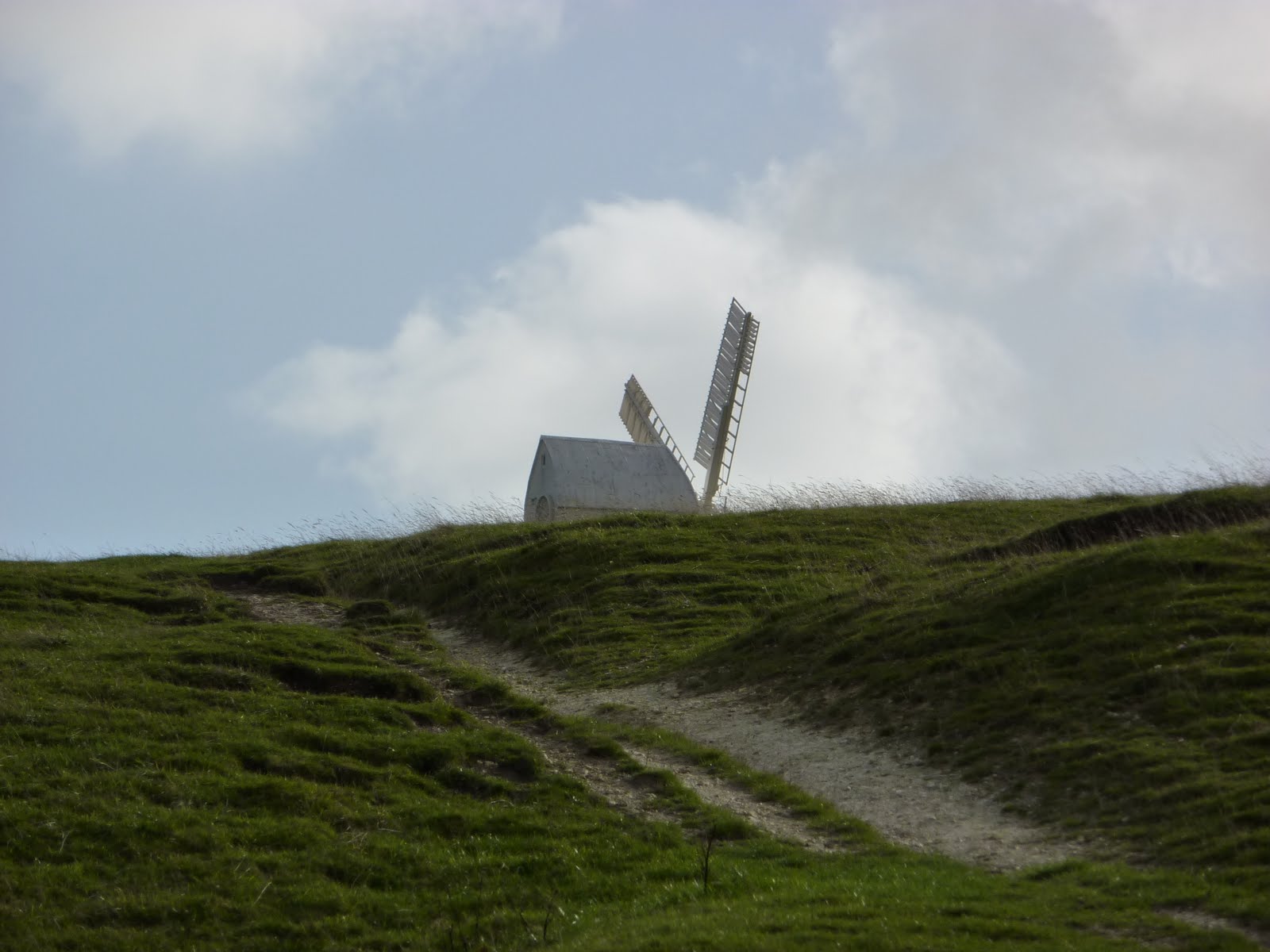
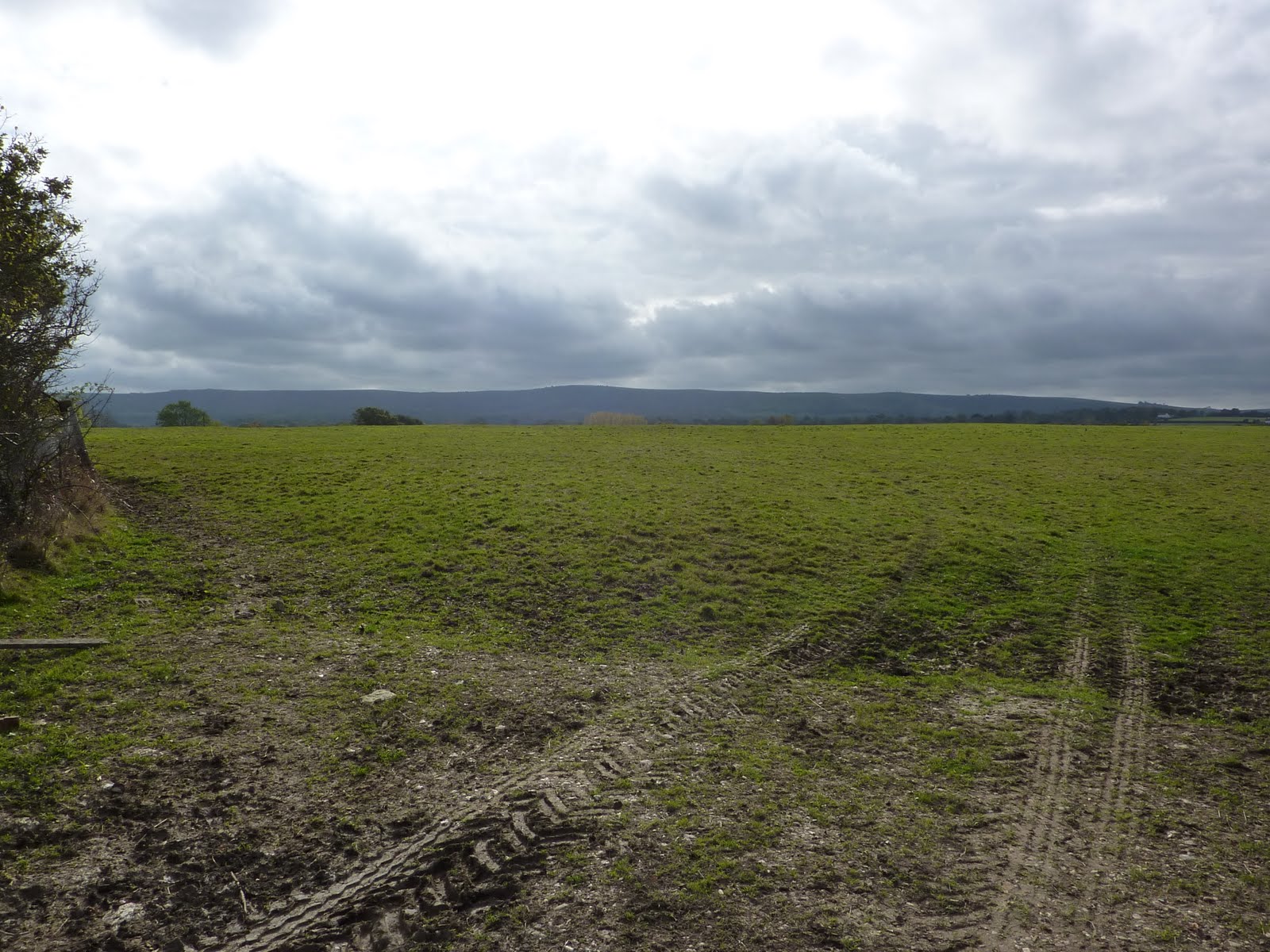
The Downs rose steeply ahead of us, the sails of the Jack and Jill windmills peeking bashfully over the sheep-filled horizon. Turning back, we could see the coloured counties, or at least Sussex, turning shades of ochre in the hazy autumn sun. Beyond the windmills, we crossed the South Downs Way, busy with walkers, dogs and horses, and skirted the edge of Pyecombe Golf Club.

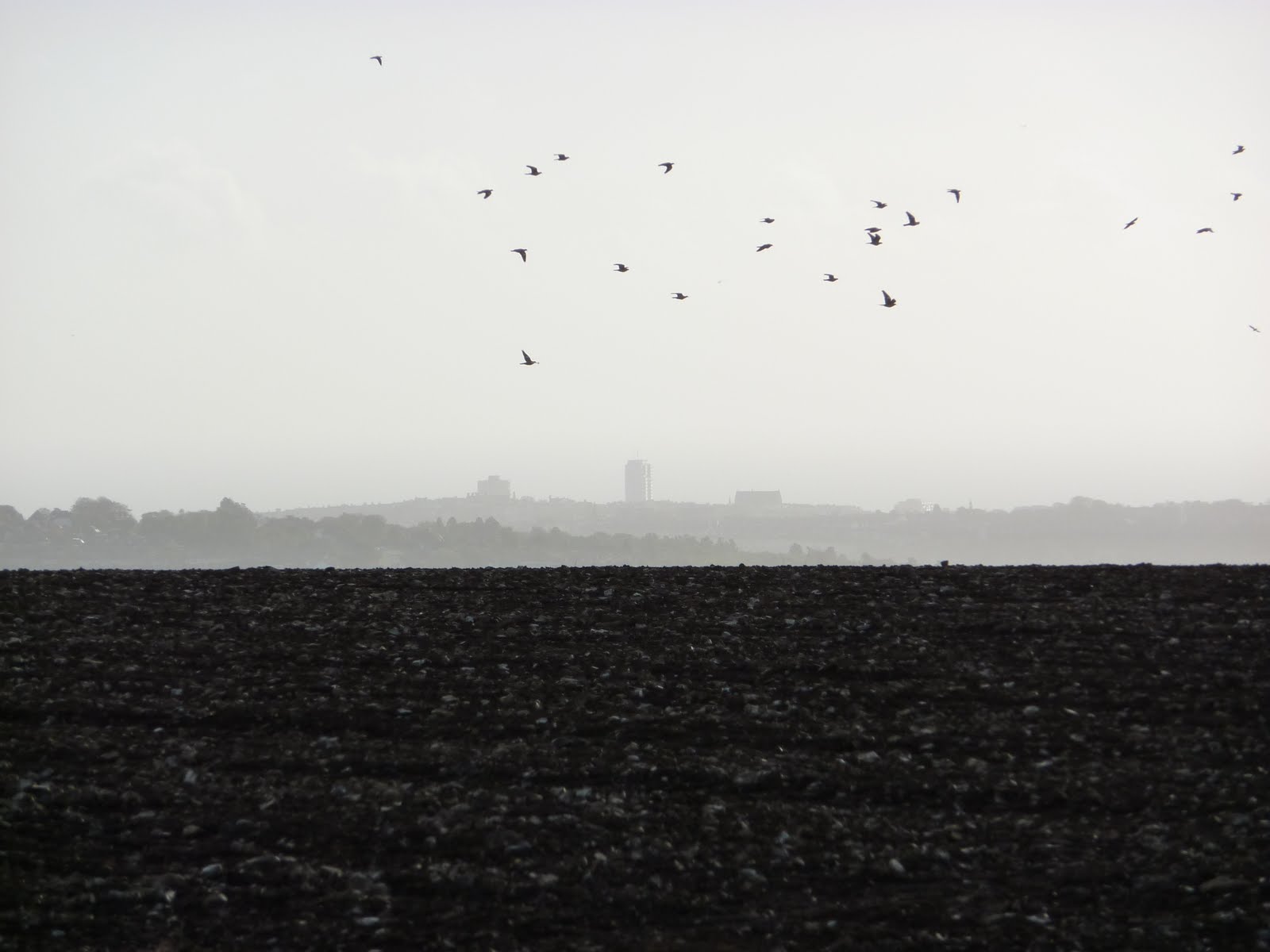
We joined the Sussex Border Path as it led through a freshly ploughed field, the bare flinty earth gleaming black under wheeling seagulls.

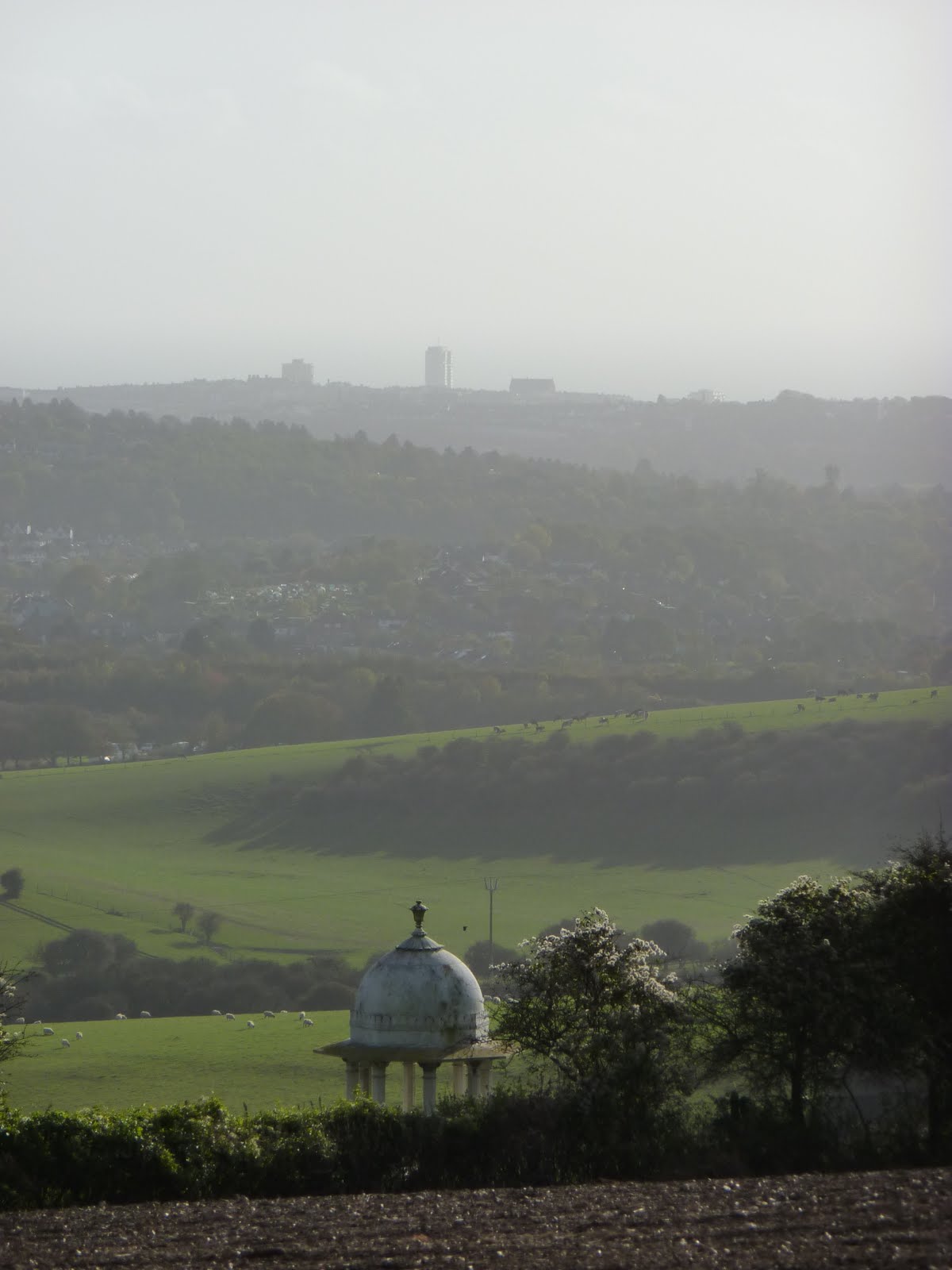
Past the Chattri War Memorial, an incongruous Mughal-styled memorial to 53 Indian soldiers whose corpses were cremated there during the First World War, Sussex Heights and Brighton\’s seafront could be seen in the distance.

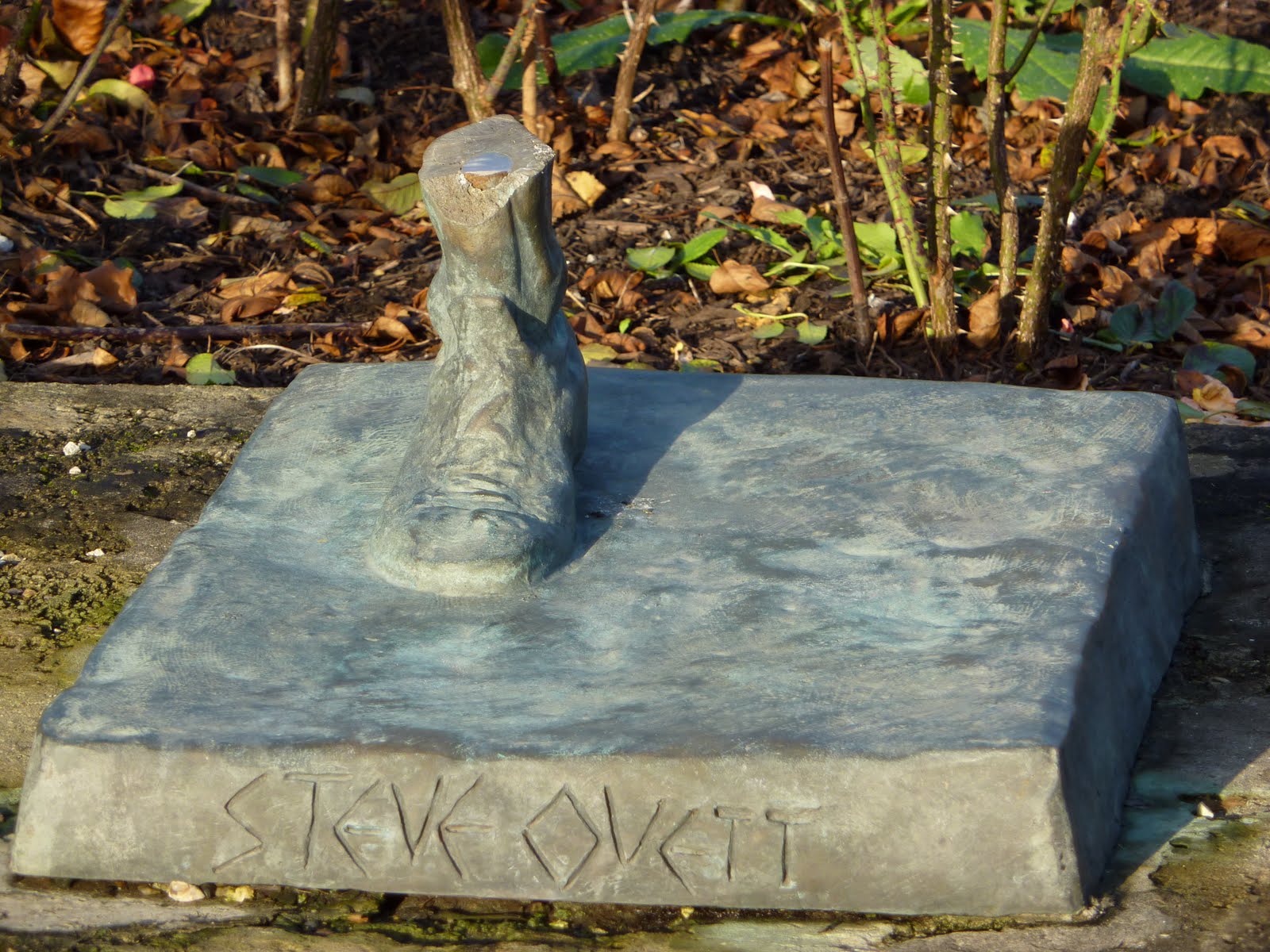
After a quick pint in Patcham\’s Black Lion, a plastic Harvester restaurant busy with squabbling families, we walked back in to Brighton on the London Road. At the south end of Preston Park, the remnants of Steve Ovett\’s despoiled statue provided a surreal footnote to the journey.
Stats: 11.25km, 7 miles, 2.5 hours

Fowl play

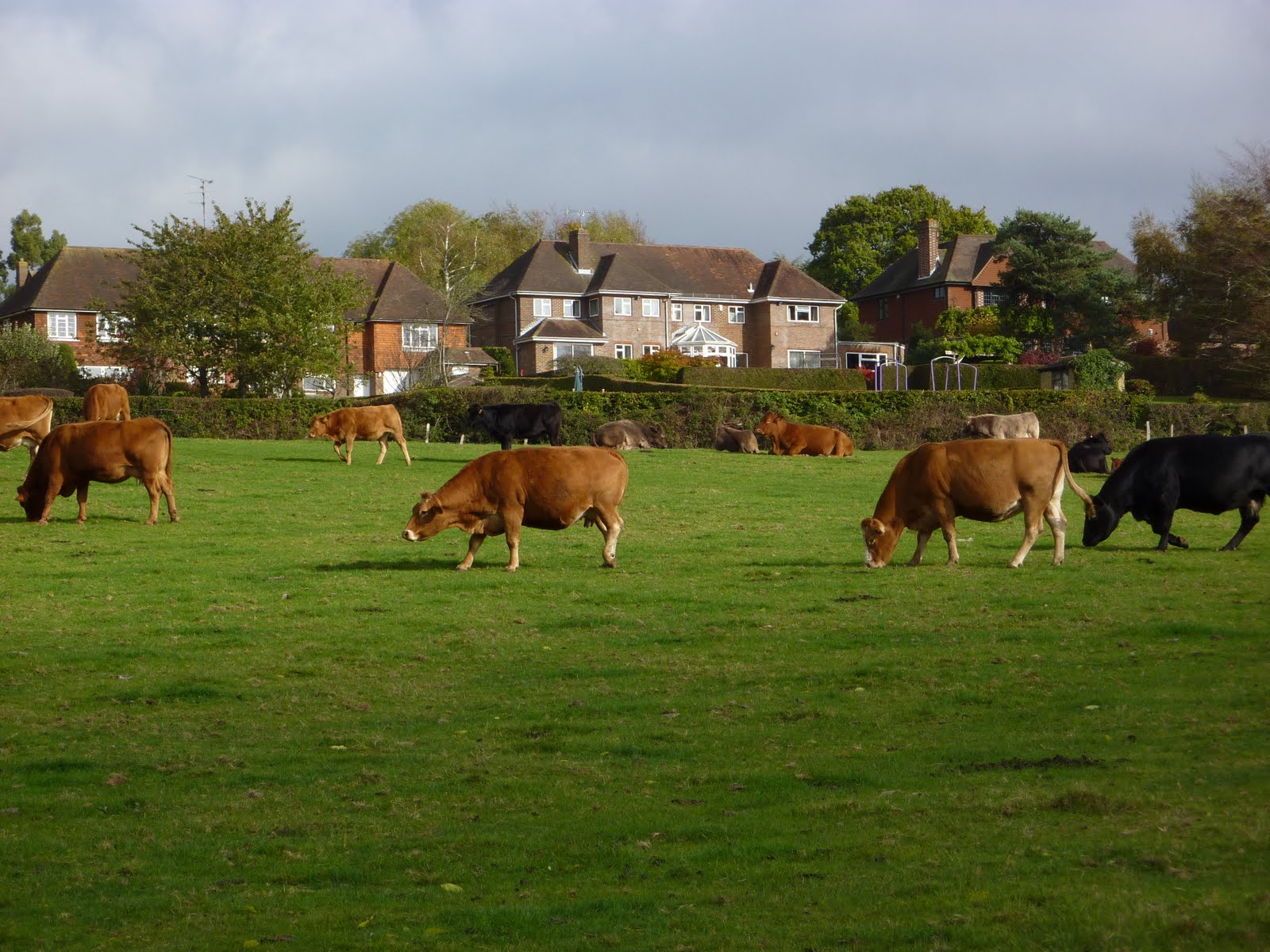
Leaving Haywards Heath, my befuddled state (head-cold fog battling it out with pseudoephedrine fizz) got me serially lost down sylvian suburban streets, with his\’n\’hers Porsche Cayennes in front drives. Eventually, as the autumn sun broke through grey clouds, I escaped into a field of cows by Fox Hill.

From here, a curiously complicated series of footpaths led me slowly south to Wivelsfield, over handsome stiles erected by the local Monday Group. The last footpath ended in a garden populated by geese and a goat. I followed the signs to cross a small bridge over a stream, but the geese had other ideas, rushing over the bridge at me with wings aloft, hissing furiously and trying to bite me between the legs. Like heavy artillery, the goat lurked malevolently behind the front lines.

Like a cross between Horatius Cocles and their Capitoline ancestors, the birds were clearly determined to defend their territory. While pondering these irrelevant classical allusions, I cast around for a weapon: would self-defence be a mitigating factor against accusations of poaching? Did I want to carry a dead goose for the rest of the walk?

Instead, I decided to beat a hasty retreat, and walked cautiously round the edge of the garden. After a mercifully brief stretch of road (the byways of Sussex are packed with speeding SUVs and white vans, not making for easy walking), I returned to open country, passing to the east of St George\’s Retreat (a rapidly-expanding care home) and between the heathland and industrial buildings of Ditchling Common.

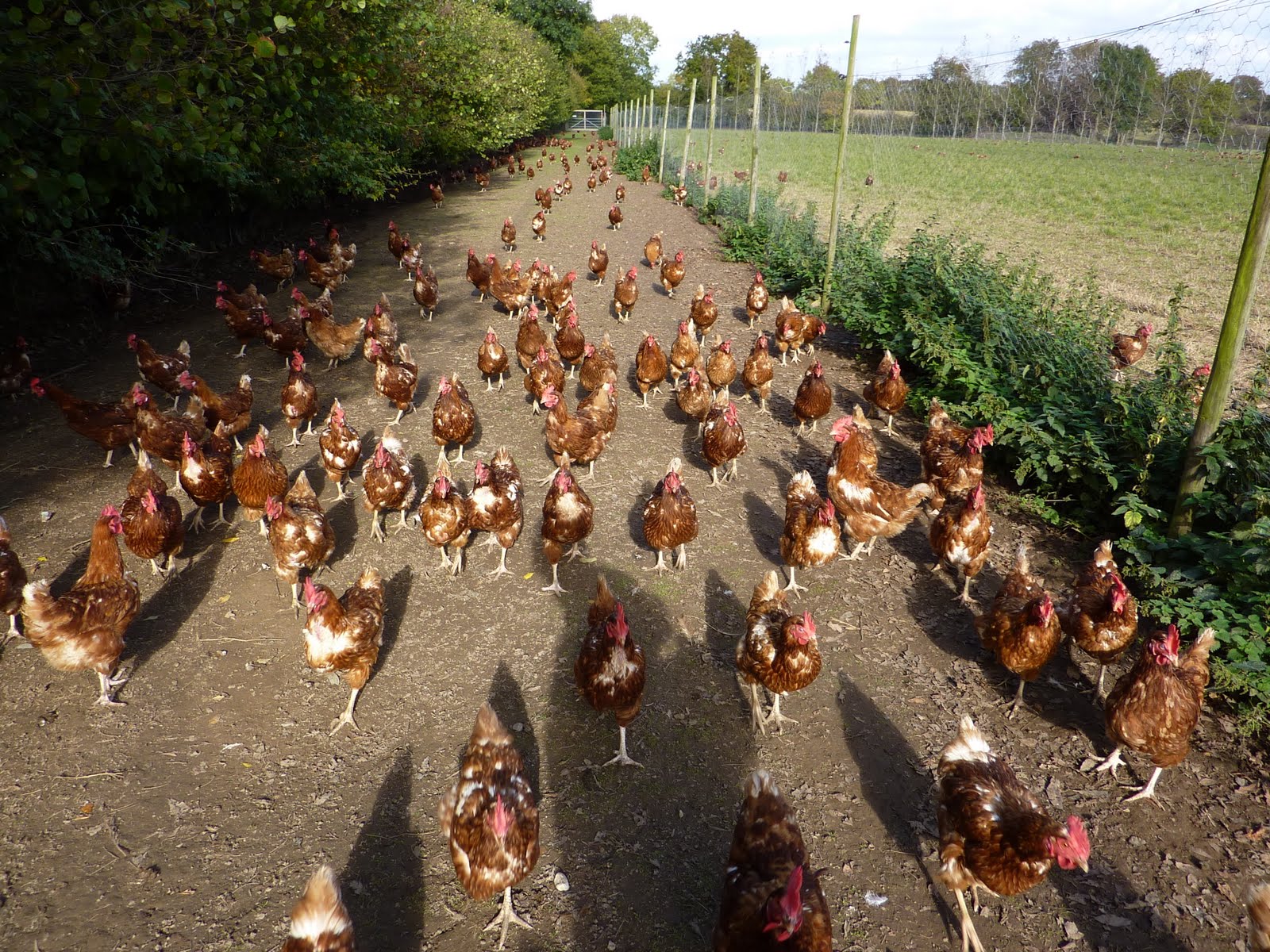
Joining the Sussex Border Path and crossing the Lewes branch of the railway, I saw a first glimpse of the South Downs in the distance. The path led into \’the Low Weald\’ – small fields of horses and grapes, and through a free range chicken farm. My second poultry encounter of the day was much more relaxed than the first: the chickens had obviously come to associate humans with food, so came rushing at me.

As I walked down the track, I looked back to see that I had attracted a retinue of the daft clucking creatures, reminding me of Bertrand Russell\’s admonition: \”Domestic animals expect food when they see the person who feeds them. We know that all these rather crude expectations of uniformity are liable to be misleading. The man who has fed the chicken every day throughout its life at last wrings its neck instead, showing that more refined views as to the uniformity of nature would have been useful to the chicken.\”

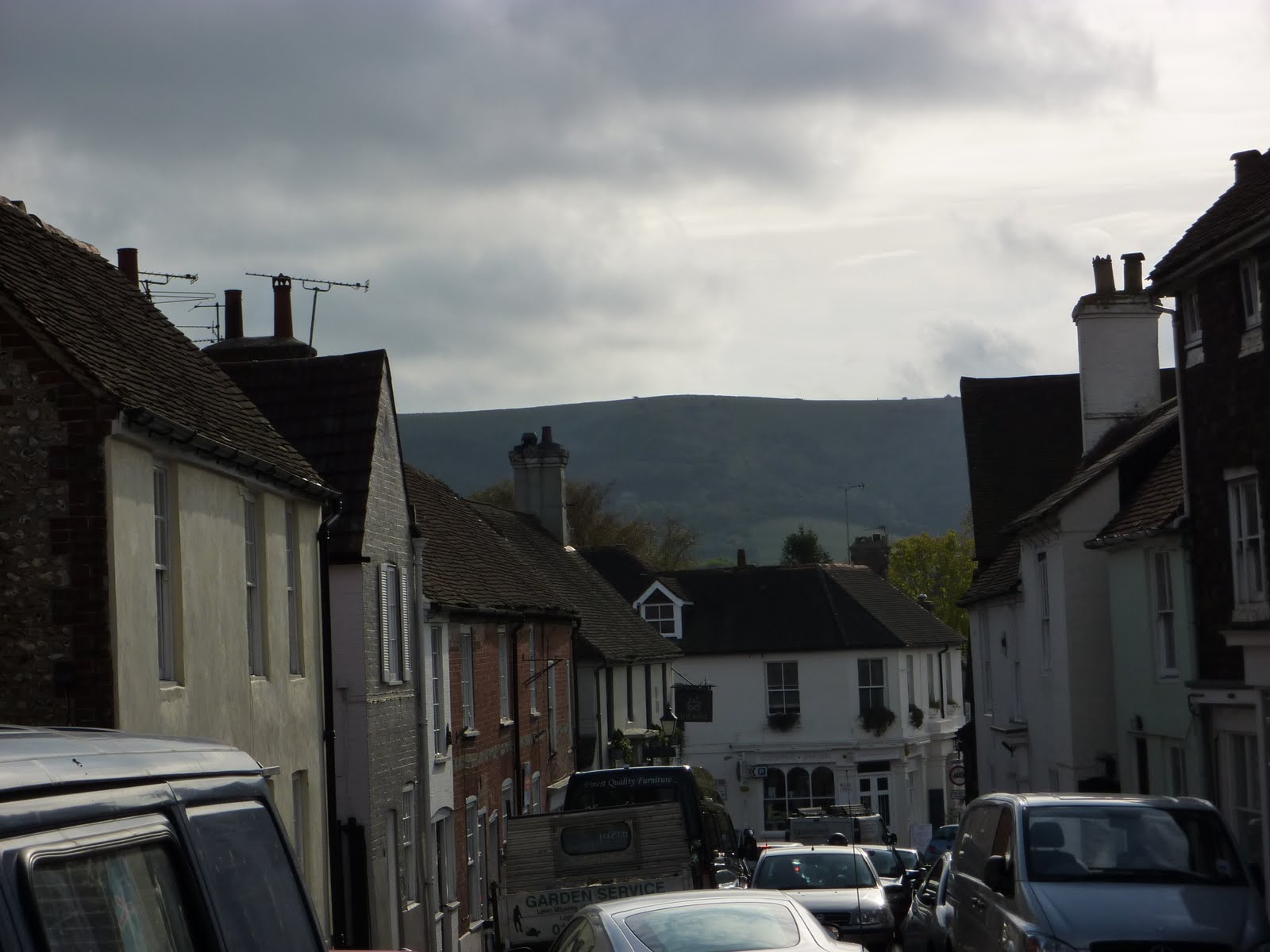
Ditchling\’s narrow high street was clogged with cars, and The Bull was packed with prosperous munchers, giving the lie to the recession with their locally-sourced and exorbitantly-priced lunches. Following an old Roman Road busy with well-dressed dog walkers, I skirted Keymer, and arrived at Hassocks Station in time to catch a train under the looming Downs back to Brighton.

Stats: 8.7 miles, 14 km, 3.25 hours

My old haunts

More than any other part of London, Southwark remains medieval. Its narrow streets, hard against railway embankments, retain an eldritch flavour of their history, of their ghosts, that centuries of development cannot fully erase.

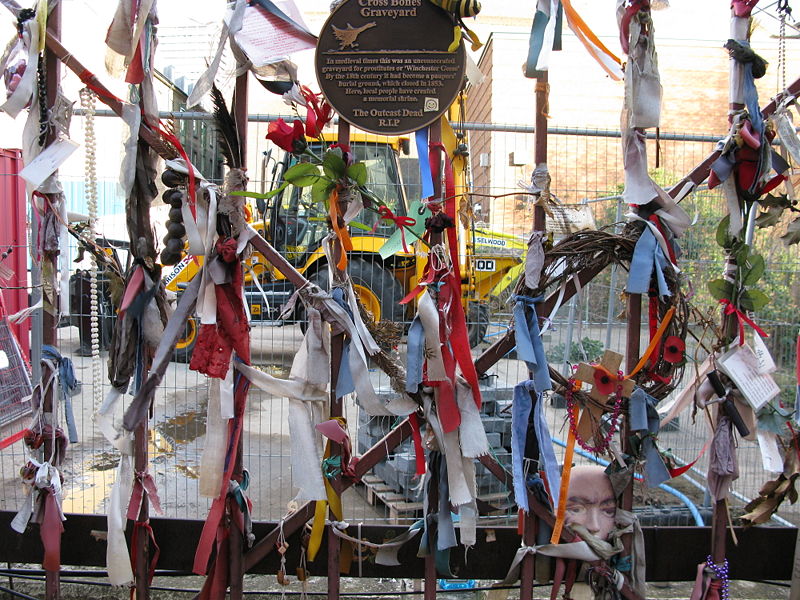
Turning down Redcross Way from Union Street a few days ago, I was immediately confronted by a faded Jubilee Line extension worksite hoarding, a ghost of my own past. Beyond this, a gate was strung with faded flowers and tributes, like the scene of a truly cataclysmic road traffic accident, or the streets of New York after 9/11.

The gate (photo, left, ProfDEH) leads into Cross Bones, an uncon- secrated burial ground first identified as a \’single women\’s church yard\’ in the 16th Century. That is to say, it was a burial site for prostitutes, known as \’Winchester Geese\’ after the Bishop of Winchester who licensed their trade, together with other unsavoury activities (bull and bear baiting, acting etc) that were only permitted south of the River.

Cross Bones subsequently became a general paupers\’ burial ground, and was closed owing to overcrowding in 1853. The Jubilee Line extension works required partial excavation of the site, though only 19th Century corpses (45 per cent of them less than a year old at time of death) were recovered.

Successive attempts by Transport for London and its predecessors to develop the site have faltered in the face of local opposition. Led by a playwright called John Constable, a local community group runs monthly remembrance rituals, and an annual event at Halloween. Despite the neo-pagan/psychogeographical hokum that these seem to involve, it is touching that some people still honour the memory of what they term \”the outcast dead\”, as the trains and lorries of the 21st Century rumble by oblivious.

Inertia creeps

I was in Chicago last weekend, at an event sponsored by the Council for the United States and Italy. The conference was about the challenges of city growth – housing, transport, environmental sustainability, government – and involved people from public and private sectors, academia, the military, and non-governmental organisations.

One theme that emerged was scepticism about the ability of elected city leaders to commit to long-term change, given the short-term imperative of electoral cycles. Some of us from public sector backgrounds suggested that this may not be as much of a problem as it seemed: given the much-criticised inertia of bureaucracies, 180-degree reverses in policy were much rarer than electoral rhetoric would suggest.

Which brings me to Boris Johnson\’s retreat from his plans to cancel the western extension of London\’s congestion charging zone. Despite commissioning a fresh consultation exercise, the capital costs of redrawing the zone, and the loss of revenue that would follow, clearly seemed too onerous. You can\’t imagine that any mayor other than Ken Livingstone would have introduced congestion charging in 2000, but now it is in place, it looks like it\’s here to stay.

Similarly, Labour did little to undo the Conservative settlement of the 1980s and 1990s, with the exception of some trade union legislation, and indeed built on many of the elements that they had most strenuously opposed in opposition. And you can only wonder whether an incoming Conservative administration would undo much of the current government\’s programme, from ID cards to Bank of England independence, against which they have so heartily inveighed.

Inertia is a mixed blessing. I railed against it when I was younger and today my views remain largely partisan (bureaucrats can be either valiant voices for common sense or obstructive dullards, depending on context). Famously frustrating to politicians like Tony Blair, inertia does perhaps serve to dissuade incoming governments from spending too much time unstitching their predecessors\’ policies.

Rather than an erratic see-saw of reversals, politics becomes a relatively smooth progression of cumulative change, for good or ill, moving on slowly. Perhaps, when Tony Blair complained of \”scars on his back\”, it was a back-handed tribute to the ability of the civil service (where nobody ever gets sacked for doing nothing) to temper change with continuity, to save us from relentless alternation.

This is conservative, to be sure, but \’conservative\’ as eloquently defined by Michael Oakeshott, not as cooked up in crazy-eyed think tanks: \”To be conservative, then, is to prefer the familiar to the unknown, to prefer the tried to the untried, fact to mystery, the actual to the possible, the limited to the unbounded, the near to the distant, the sufficient to the superabundant, the convenient to the perfect, present laughter to utopian bliss.\”

To the valley below

Balcombe to Haywards Heath is only about two miles as the crow flies. I am not a crow, so this stage of the walk described a lazy s-shape, passing through the Ouse Valley and under the magnificent Ouse Valley Viaduct.

Leaving Balcombe south on the B2036, I escaped from the rattle of the rails down into a wooded valley swarming with pheasants, scurrying indignantly ahead of me, or squawking and rustling from the undergrowth. At the top of the valley, the landscape opened up, with a glimpse of the Viaduct in the distance. I joined the Sussex Ouse Valley Way and turned east towards the Viaduct, which emerged through a landscape that seemed almost unnaturally green in the late summer sun.

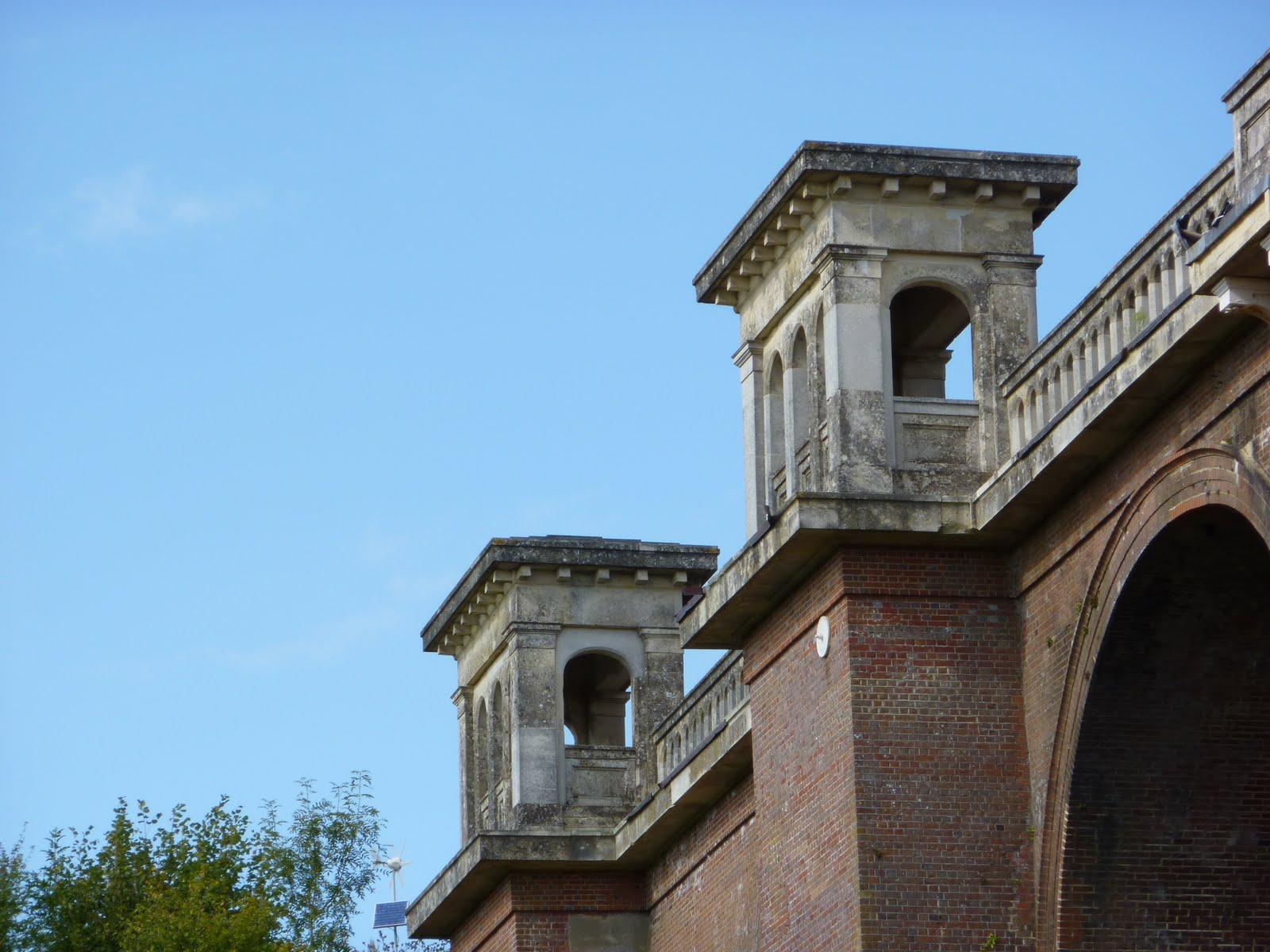
The view from the top of the Viaduct is, at any time of year, one of the highlights of the train journey from London to Brighton. Rushing past incongruous Palladian gatehouses and stone balustrades, rail passengers are treated to a panorama of timeless southern English countryside, with old brick farm buildings dotted throughout the wide and well-wooded valley, and the schools buildings of Ardingly College in the background.

Approaching the Viaduct from ground level, you become aware of the strength and grace of the structure. The 37 brick supports are hollow-centred, creating mesmerising patterns as they retreat up the slopes of the valley. Texture and depth is added by the different styles of brick that have been used to patch and maintain the Grade II-listed structure through its 170-year history – according to wikipedia, more than 100 trains a day pass over it.

Beyond the Viaduct, I took a short-cut through River\’s Wood, then rejoined the path, as it led through the pastel-shirted ersatz landscape of Haywards Heath Golf Club. Disorientated by its homgenised sandpits and ornamental tree-planting, I took a wrong turn and ended up on High Beach Lane, which led me into Haywards Heath past suburban villas and McMansions.

When I walked in to the Burrell Arms, opposite the station, I was grateful that I only had time for a quick half-pint. If this pub is not the worst in town, I shudder to think what its competition must be like.

Stats: 5.8 miles, 9.4km, 2 hours

For what it\’s Worth

Footpaths are elusive at Gatwick Airport, but if you walk south past the valet parking depot, the car hire desks and the smoking sheds full of re-dosing new arrivals, you eventually find a West Sussex County Council fingerpost, looking as alien as a pennyfarthing at the TT races.

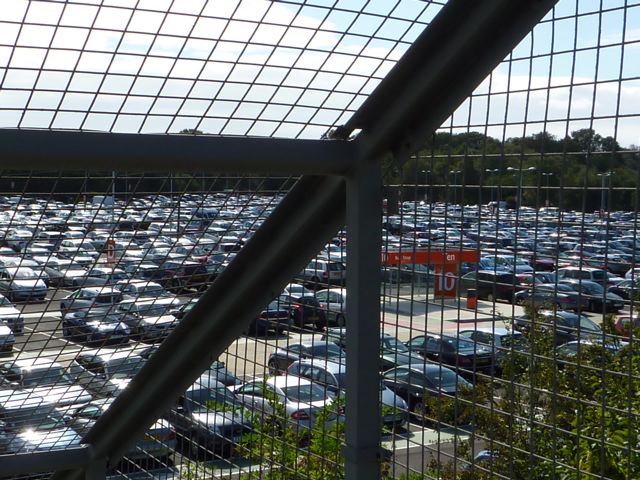
The path winds between the long-term car parks, and crosses over the internal road system, encased all the way in a wire cage, as the planes roar in overhead. As the airport sprawled, someone presumably fought for the preservation of this right of way, but it makes you feel like a perimeter guard at a high security prison. After a surprisingly long time, we cleared the airport, spotting a fox cub and a muntjac on the way, then meandered back over the motorway to Shipley Bridge.

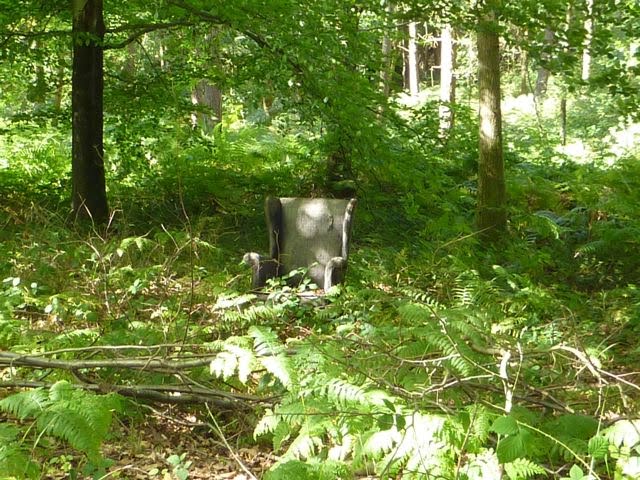
Turning south, we followed roads and footpaths through Copthorne, then entered the western fringes of Ashdown Forest (\’home\’, its website earnestly informs us, of Winnie the Pooh). Police signs on the gates warned of malicious damage to flora and fauna – bear-of-little-brain-baiting, perhaps, or thistle-rustling? – but the tracks through the well-managed woods were almost deserted, decorated only by piles of logs and the occasional feral club chair.

Abruptly, the forest gave way to the lawns, playing fields and golf courses of Worth School, a Catholic boarding school boasting the grandiose but grim architecture in which such institutions specialise. We were a couple of weeks away from the beginning of term, but already lawn mowing and line painting was immaculate, ready for the onslaught of a new academic year.

A thirsty diversion west through more woods led to The Cowdray, a recently refurbished pub with a sunny beer garden full of families. A slow-moving elderly lady, looking down at a toddling infant, remarked with casual menace, \”If you get in my way, I will tread on you, you know.\” Outraged expressions all round. The Cowdray\’s reinvention of the club sandwich was – as reinvented club sandwiches tend to be – perfectly pleasant in itself, but not a patch on the original.

The rest of the walk to Balcombe, along the busy B2036, was functional rather than scenic. Balcombe itself was full of blackberry pickers, looking on each other with a mixture of curiosity and paranoia as they hunted down the most fruitful and accessible branches.

Stats: 9.2 miles, 14.8 km, 4 hours

Tales of antique power

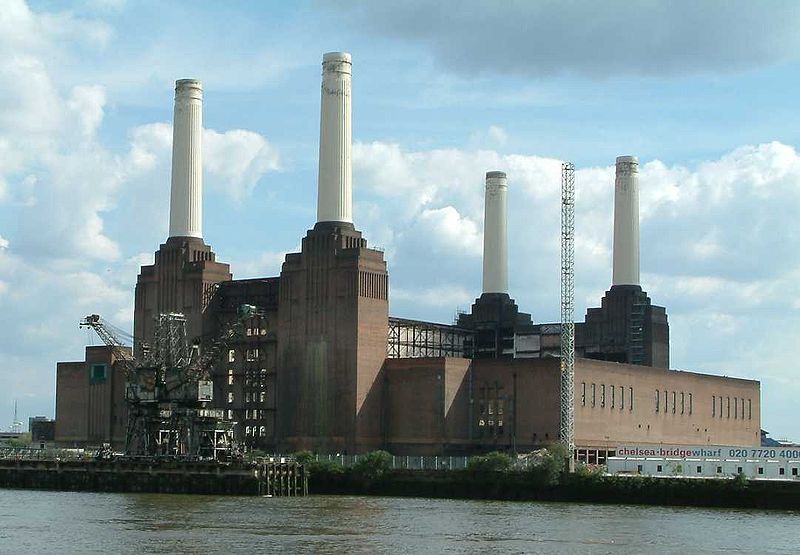
Another year, another scheme for redeveloping Battersea Power Station begins to wilt. The site is caught in a double bind. The listed power station (right, photo Tagishsimon) takes up so much space and requires so much investment to keep it safe, let alone equip it for re-occupation, that it is hard to make any scheme make commercial sense at the best of times.

Balancing the books requires a density of development on the rest of the site that cannot be reconciled with its poor public transport accessibility, and the costs of building new infrastructure (the most recent proposals include a spur from the Northern Line) just make marginally viable proposals more fragile still.

You could argue that the only way to bring the site into use would be to demolish the power station. That would be a shame. I have been lucky enough to visit the building, designed by Sir Giles Gilbert Scott and opened in 1933, and its interiors are as stunning as its looming form, if not more so. The turbine halls are elegantly tiled, and the control rooms truly magnificent. Crafted wooden fittings are surrounded by decorative wall and ceiling tiles, and bakelite switches are inscribed with the names of substations and districts. This, the interiors say, is a place where something important, and magical, takes place.

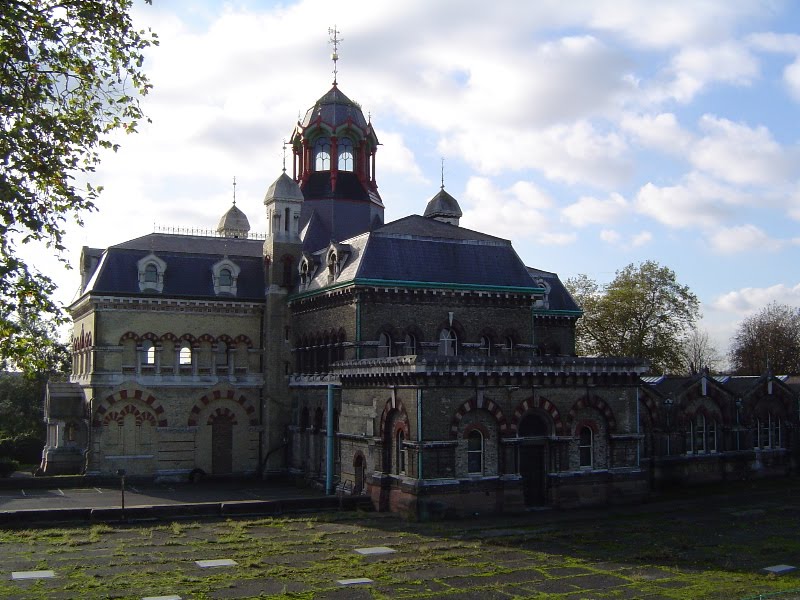
The overall impression is one of pride, pride in the modernism and progress that this temple of power once represented, a pride that can also be seen in elaborate Victorian shrines of sanitation, like Bazalgette\’s ornate pumping stations at Crossness and Abbey Mills (left, photo Gordon Joly).

This pride in utilities is something we have lost. As I walked through Redhill a couple of weeks ago, the contrast between the grandeur of the Royal Earlswood Hospital and the shabby incoherence of the East Surrey Hospital could not have been starker. While offices, libraries and civic centres can still win awards, it is almost as if the mundane necessities of power, health and sanitation have become embarassments, to be covered up and smothered, like a burp in polite company.

We are left with tacky trash, rendered all the more conspicuous by its artless attempts to blend in.

Walking fifty miles in their shoes?

I have done some sniffing around the web to find any other accounts of walking from London to Brighton, and have found very little. Two minor gems: this marvellous Pathe film of a London-Brighton walking race in 1955, and – even more eccentrically – these photographs of Mademoiselle Florence, a lady who walked from London to Brighton on a ball in 1903. Respect.

Trains, planes and automobiles

Redhill is a good place to leave. I had arrived by train from Victoria, where I saw a family of recently arrived tourists (Iranian, I think) trying to collect the necessary change to use the public loos (£1.50 for the five of them). It felt deeply shaming that this chiselling approach to basic human needs was to be one of their first experiences of the UK.

Back to Redhill, where a bit of fancy footwork along the A25 took me away from the shopping mall that appeared to have replaced the town centre, and to the south. Redhill\’s former \’asylum for idiots\’, the Royal Earlswood Hospital has – like so many of London\’s green belt asylums – been redeveloped as housing. The main building is imposing and impressive (you can see it from the railway line), as befits an establishment that was the residence of the Queen Mother\’s nieces for many secret years. It is now mocked by the cheap pastiche that surrounds it, buildings crammed together like Monopoly houses. There is still a gate, presumably to keep people out rather than in nowadays, though it\’s a pretty moot point.

From alongside the hospital (and leading past the newer East Surrey Hospital and the isolated housing estate (perhaps a \’New Village\’?) of Whitebushes), a slightly monotonous bridleway and cycle track takes you south to Horley, staying a fairly consistent field\’s width away from the railway line. In several places, what was marked on the OS map as fields has been taken over by new housing estates. Many of these can be seen from the train. They do not look much more impressive close to.

The Farmhouse, just on the northern edge of Horley, lies alongside one of these estates, but has a good garden for a pint (and a magnificent \’smoking pavilion\’, in which the landlord has drolly made space for a bar \”should the Government…ban alcohol in pubs in future\”). Continuing clockwise round the town, I made for Thunderfield Castle, which looked more impressive on the map than it did with reality: a caravan site surrounded by a redundant moat of oily, stagnant water.

Modern buildings down these small back streets and bridleways were far more effectively secured, with electric gates and high hedges protecting the privacy of large houses and large cars.

Clear of Horley, the roar of the motorway grows again as you approach the M23 spur to Gatwick, this time mixed with the intermittent rattling of trains and the keening whine of aircraft. Cows in the fields alongside seem curiously nonchalant, as I creep through the din and the brambles to the airport.

Stats: 2.5 hours, 12.75km, 8 miles