To the valley below

Balcombe to Haywards Heath is only about two miles as the crow flies. I am not a crow, so this stage of the walk described a lazy s-shape, passing through the Ouse Valley and under the magnificent Ouse Valley Viaduct.

Leaving Balcombe south on the B2036, I escaped from the rattle of the rails down into a wooded valley swarming with pheasants, scurrying indignantly ahead of me, or squawking and rustling from the undergrowth. At the top of the valley, the landscape opened up, with a glimpse of the Viaduct in the distance. I joined the Sussex Ouse Valley Way and turned east towards the Viaduct, which emerged through a landscape that seemed almost unnaturally green in the late summer sun.

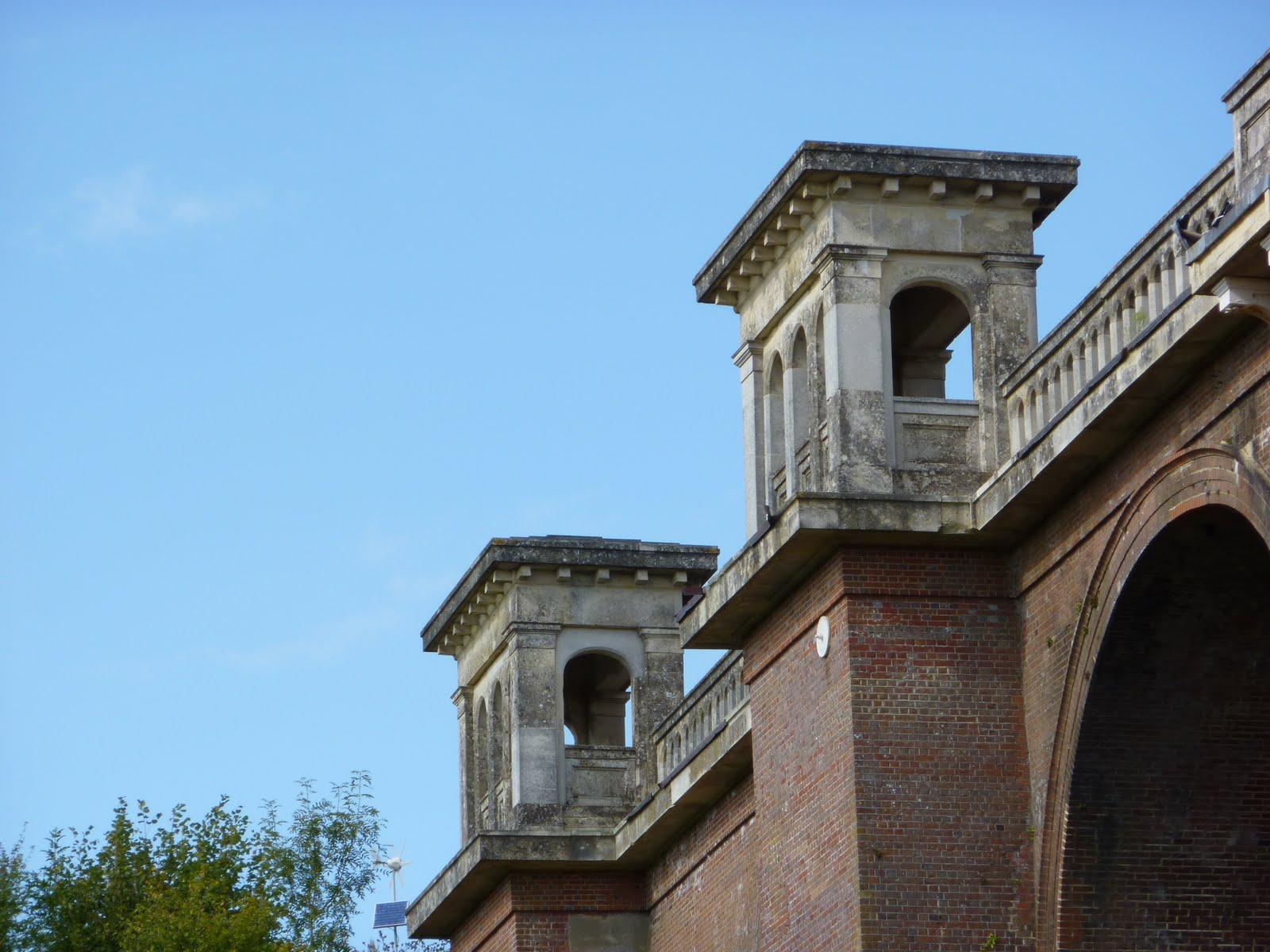
The view from the top of the Viaduct is, at any time of year, one of the highlights of the train journey from London to Brighton. Rushing past incongruous Palladian gatehouses and stone balustrades, rail passengers are treated to a panorama of timeless southern English countryside, with old brick farm buildings dotted throughout the wide and well-wooded valley, and the schools buildings of Ardingly College in the background.

Approaching the Viaduct from ground level, you become aware of the strength and grace of the structure. The 37 brick supports are hollow-centred, creating mesmerising patterns as they retreat up the slopes of the valley. Texture and depth is added by the different styles of brick that have been used to patch and maintain the Grade II-listed structure through its 170-year history – according to wikipedia, more than 100 trains a day pass over it.

Beyond the Viaduct, I took a short-cut through River\’s Wood, then rejoined the path, as it led through the pastel-shirted ersatz landscape of Haywards Heath Golf Club. Disorientated by its homgenised sandpits and ornamental tree-planting, I took a wrong turn and ended up on High Beach Lane, which led me into Haywards Heath past suburban villas and McMansions.

When I walked in to the Burrell Arms, opposite the station, I was grateful that I only had time for a quick half-pint. If this pub is not the worst in town, I shudder to think what its competition must be like.

Stats: 5.8 miles, 9.4km, 2 hours

For what it\’s Worth

Footpaths are elusive at Gatwick Airport, but if you walk south past the valet parking depot, the car hire desks and the smoking sheds full of re-dosing new arrivals, you eventually find a West Sussex County Council fingerpost, looking as alien as a pennyfarthing at the TT races.

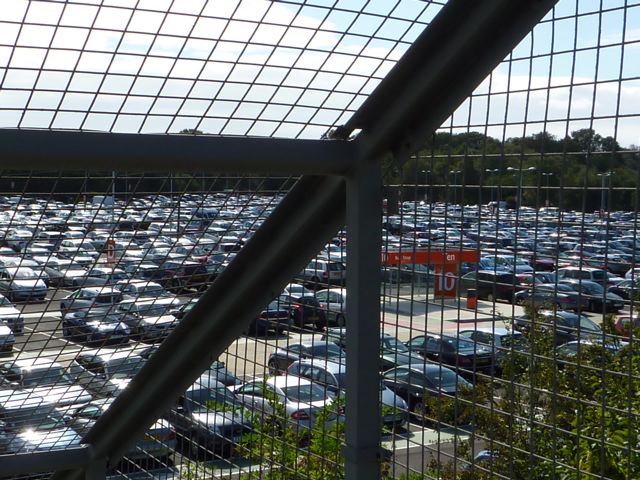
The path winds between the long-term car parks, and crosses over the internal road system, encased all the way in a wire cage, as the planes roar in overhead. As the airport sprawled, someone presumably fought for the preservation of this right of way, but it makes you feel like a perimeter guard at a high security prison. After a surprisingly long time, we cleared the airport, spotting a fox cub and a muntjac on the way, then meandered back over the motorway to Shipley Bridge.

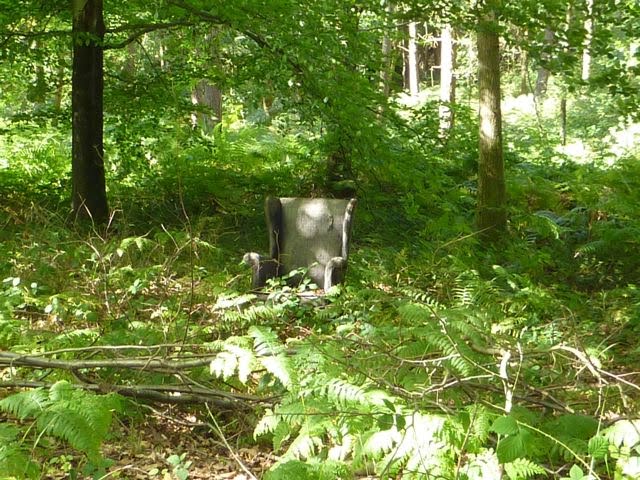
Turning south, we followed roads and footpaths through Copthorne, then entered the western fringes of Ashdown Forest (\’home\’, its website earnestly informs us, of Winnie the Pooh). Police signs on the gates warned of malicious damage to flora and fauna – bear-of-little-brain-baiting, perhaps, or thistle-rustling? – but the tracks through the well-managed woods were almost deserted, decorated only by piles of logs and the occasional feral club chair.

Abruptly, the forest gave way to the lawns, playing fields and golf courses of Worth School, a Catholic boarding school boasting the grandiose but grim architecture in which such institutions specialise. We were a couple of weeks away from the beginning of term, but already lawn mowing and line painting was immaculate, ready for the onslaught of a new academic year.

A thirsty diversion west through more woods led to The Cowdray, a recently refurbished pub with a sunny beer garden full of families. A slow-moving elderly lady, looking down at a toddling infant, remarked with casual menace, \”If you get in my way, I will tread on you, you know.\” Outraged expressions all round. The Cowdray\’s reinvention of the club sandwich was – as reinvented club sandwiches tend to be – perfectly pleasant in itself, but not a patch on the original.

The rest of the walk to Balcombe, along the busy B2036, was functional rather than scenic. Balcombe itself was full of blackberry pickers, looking on each other with a mixture of curiosity and paranoia as they hunted down the most fruitful and accessible branches.

Stats: 9.2 miles, 14.8 km, 4 hours

Tales of antique power

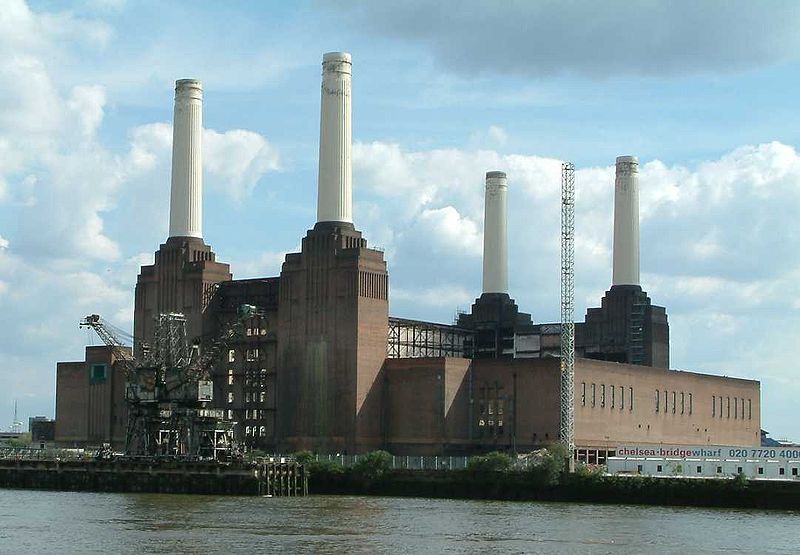
Another year, another scheme for redeveloping Battersea Power Station begins to wilt. The site is caught in a double bind. The listed power station (right, photo Tagishsimon) takes up so much space and requires so much investment to keep it safe, let alone equip it for re-occupation, that it is hard to make any scheme make commercial sense at the best of times.

Balancing the books requires a density of development on the rest of the site that cannot be reconciled with its poor public transport accessibility, and the costs of building new infrastructure (the most recent proposals include a spur from the Northern Line) just make marginally viable proposals more fragile still.

You could argue that the only way to bring the site into use would be to demolish the power station. That would be a shame. I have been lucky enough to visit the building, designed by Sir Giles Gilbert Scott and opened in 1933, and its interiors are as stunning as its looming form, if not more so. The turbine halls are elegantly tiled, and the control rooms truly magnificent. Crafted wooden fittings are surrounded by decorative wall and ceiling tiles, and bakelite switches are inscribed with the names of substations and districts. This, the interiors say, is a place where something important, and magical, takes place.

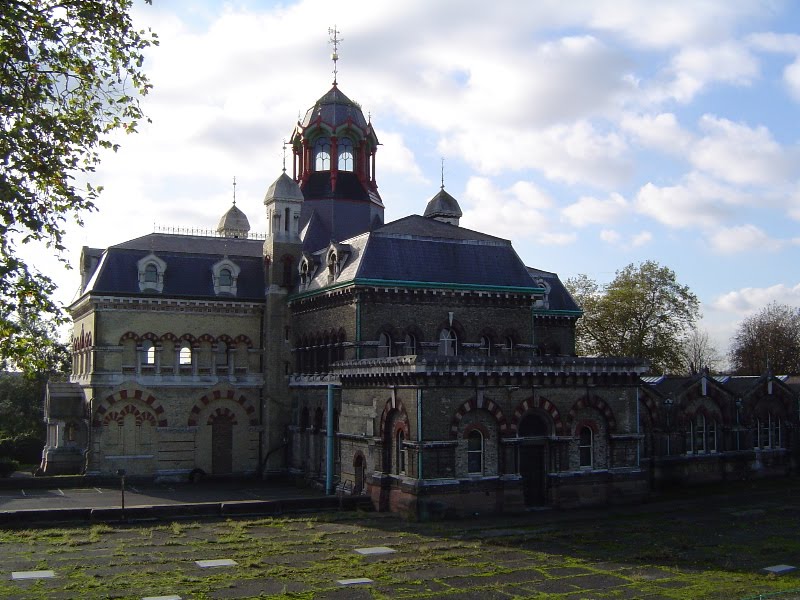
The overall impression is one of pride, pride in the modernism and progress that this temple of power once represented, a pride that can also be seen in elaborate Victorian shrines of sanitation, like Bazalgette\’s ornate pumping stations at Crossness and Abbey Mills (left, photo Gordon Joly).

This pride in utilities is something we have lost. As I walked through Redhill a couple of weeks ago, the contrast between the grandeur of the Royal Earlswood Hospital and the shabby incoherence of the East Surrey Hospital could not have been starker. While offices, libraries and civic centres can still win awards, it is almost as if the mundane necessities of power, health and sanitation have become embarassments, to be covered up and smothered, like a burp in polite company.

We are left with tacky trash, rendered all the more conspicuous by its artless attempts to blend in.

Walking fifty miles in their shoes?

I have done some sniffing around the web to find any other accounts of walking from London to Brighton, and have found very little. Two minor gems: this marvellous Pathe film of a London-Brighton walking race in 1955, and – even more eccentrically – these photographs of Mademoiselle Florence, a lady who walked from London to Brighton on a ball in 1903. Respect.

Trains, planes and automobiles

Redhill is a good place to leave. I had arrived by train from Victoria, where I saw a family of recently arrived tourists (Iranian, I think) trying to collect the necessary change to use the public loos (£1.50 for the five of them). It felt deeply shaming that this chiselling approach to basic human needs was to be one of their first experiences of the UK.

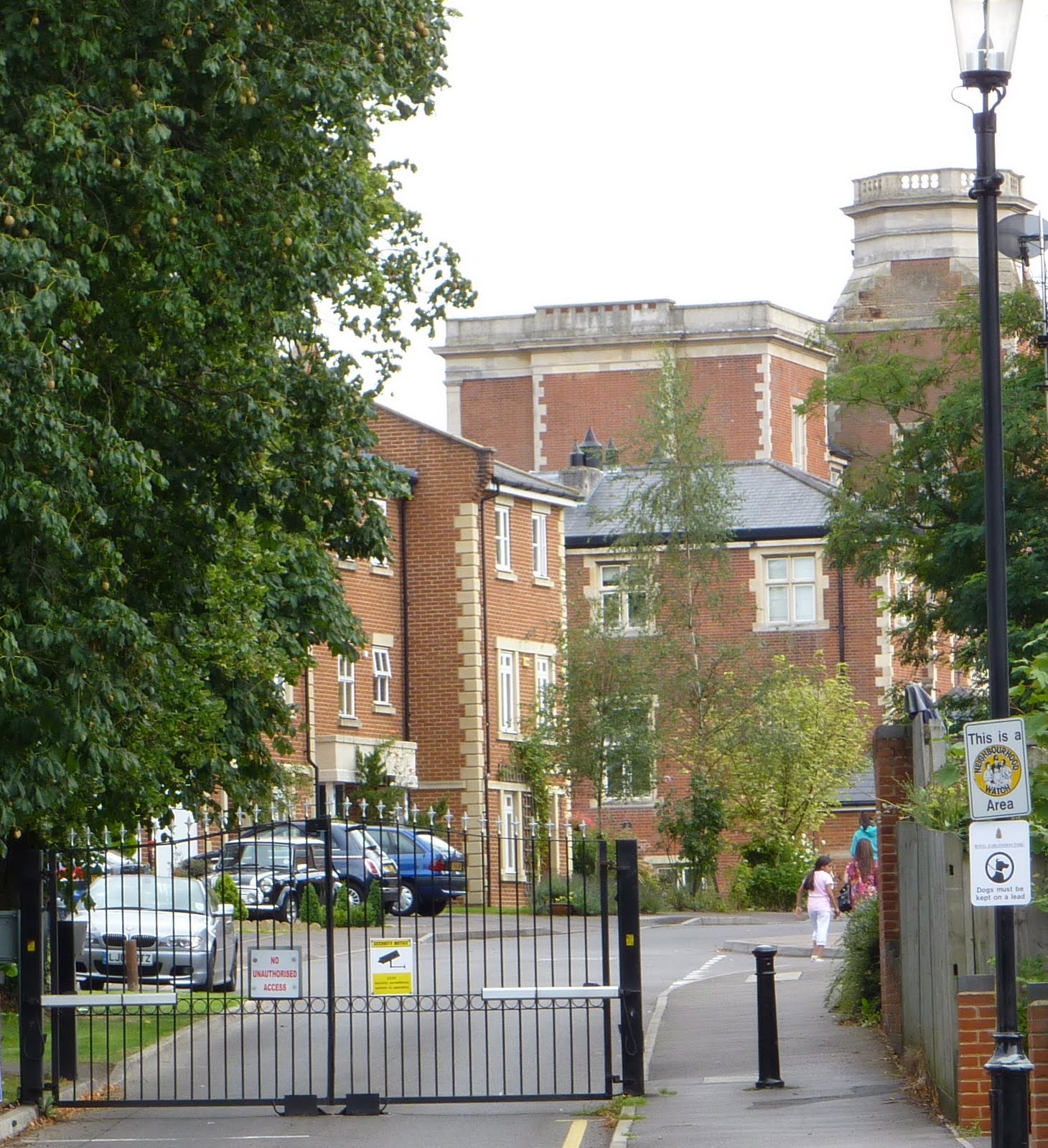
Back to Redhill, where a bit of fancy footwork along the A25 took me away from the shopping mall that appeared to have replaced the town centre, and to the south. Redhill\’s former \’asylum for idiots\’, the Royal Earlswood Hospital has – like so many of London\’s green belt asylums – been redeveloped as housing. The main building is imposing and impressive (you can see it from the railway line), as befits an establishment that was the residence of the Queen Mother\’s nieces for many secret years. It is now mocked by the cheap pastiche that surrounds it, buildings crammed together like Monopoly houses. There is still a gate, presumably to keep people out rather than in nowadays, though it\’s a pretty moot point.

From alongside the hospital (and leading past the newer East Surrey Hospital and the isolated housing estate (perhaps a \’New Village\’?) of Whitebushes), a slightly monotonous bridleway and cycle track takes you south to Horley, staying a fairly consistent field\’s width away from the railway line. In several places, what was marked on the OS map as fields has been taken over by new housing estates. Many of these can be seen from the train. They do not look much more impressive close to.

The Farmhouse, just on the northern edge of Horley, lies alongside one of these estates, but has a good garden for a pint (and a magnificent \’smoking pavilion\’, in which the landlord has drolly made space for a bar \”should the Government…ban alcohol in pubs in future\”). Continuing clockwise round the town, I made for Thunderfield Castle, which looked more impressive on the map than it did with reality: a caravan site surrounded by a redundant moat of oily, stagnant water.

Modern buildings down these small back streets and bridleways were far more effectively secured, with electric gates and high hedges protecting the privacy of large houses and large cars.

Clear of Horley, the roar of the motorway grows again as you approach the M23 spur to Gatwick, this time mixed with the intermittent rattling of trains and the keening whine of aircraft. Cows in the fields alongside seem curiously nonchalant, as I creep through the din and the brambles to the airport.

Stats: 2.5 hours, 12.75km, 8 miles

I fell in love with the beautiful highway

\”The journey of 1,000 miles starts with a single step\”

I spend so much time travelling between London and Brighton, that I thought it would be worth walking the route, if only to understand better the familiar but always half-glimpsed landscape as it flashes past the window.

Coulsdon South was the starting point. I wanted the trip to be more honest than scenic, but trudging through Streatham, Norbury, Purley and all points in between seemed to be an exercise in unnecessary masochism. A few yards from the station, the path across Farthing Downs takes you to the top of the North Downs, the hillsides dotted with forests in one direction and suburban villas in another. The road narrows and continues down towards Chaldon, with huge SUVs squeezing past each other, rushing to conclude the slightly furtive business that seems to dominate London\’s fringes.

I wandered off the road to try to follow a path through Devilsden Wood, but quickly got confused by too many paths rather than two few, almost all of them marked \’Happy Valley Nature Trail\’. That wasn\’t what I wanted – it sounded far too urban and didactic for my mood – but it seemed to have taken over all signage, like Japanese Knotweed smothering native species.

I returned to Ditches Road pretty near where I had left it, dodged some more SUVs and the occasional tractor, then walked past Chaldon\’s 11th Century Church (no camera this time, but I hope to remedy that in future stages). Past a couple of farms and then the most fantastic vista over the great closerleaf of the M23-M25 junction, with the M23 snaking through misty skies to the South.

Motorways may be bad in all sorts of ways (planet, health etc), but watching them twining together through wooded valleys, you are reminded what beauties of engineering they are too. Walking through cornfields down to the road, the roar of the traffic growing steadily more insistent, you feel like an archaeologist or an alien, unearthing something at once thrilling and abstruse.

A path passed under the M23, through Merstham, cut off like a sandbank between two rivers, then over the M25. Following the bank round above the junction, I passed more intriguing edge of city developments (razorwire and daubed signs – \’GUARD DOGS LOSE AT ALL TIME! KEEP OUT!!!\’).

Nature reserves indicated the sites of past gravel pits, and the path eventually emerged at Nutfield Marsh. The Inn on the Pond was exactly the pub I didn\’t want to find for lunch: restaurant-focused, with precious little bar service, and an interior that looked like it had been selected by an auto-gastropub programme. Very sorry, very Surrey.

The chef cites \”Gordon Ramsay, Jamie Oliver and Thomas Keller of Napa Valley’s ‘French Landry’ [sic] restaurant fame as his food influences\”. I had a ham baguette, in which few of these influences were discernible. It\’s a bit like me saying that this account is inspired by Patrick Leigh Fermor. It may be true, but it has no bearing on the quality of my prose.

From there, the idea of walking into Redhill, past the huge new housing estates being built in gravel pits that I had seen from the train, seemed too depressing a prospect, so I took a slightly woozy route across fields to Nutfield itself, then a further stroll (downhill again) onto South Nutfield, where a train arrived, miraculously, as I did.

Stats: 3.5 hours, 13.25km, 8.25 miles

re-dac-tor

\’Redact\’ is one of those ugly words (like \’resile\’) that seems to have insinuated itself into everyday speech without anyone noticing, let alone objecting.

Since 2005, redaction has been used in the public sector to describe the act of obliterating any interesting, sorry I mean \’sensitive\’, information in response to Freedom of Information requests, usually by use of a black marker pen. It was the publication of MPs\’ expenses (or rather the publication of Mondrian-esque blocks of black ink) that allowed the word to break out of its status as a piece of public sector jargon, and enter the real world.

The dictionary (Chambers 21st Century) defines \’redact\’ as \’to edit; to put (text) into the appropriate literary form\’, and traces its use back to the Latin redigere – to bring back. It is an irony worthy of Orwell that a word associated with tidying up for publication is now used to signify censorship and the suppression of information.

Poets, politicians, beauty queens and cooks

I don\’t seem to have put much up here recently. Normal service will be resumed presently.

In the meantime, here is one of Nick Asbury\’s \’corpoetics\’ – poetry assembled from the airy and conceited twaddle that infests corporate websites:

KPMG

I am strong.
I am vibrant.
I am committed to a vision.

I am tremendous.
I am quality.
I will lead people to excellence.

I am delighted.
I am respected.
I am very greatly valued.

What am I?
I am the best.

Reproduced without any permission, but please go and buy the book, and enoy other features on the Asbury blog, such as distinguishing the names of Fall songs from tax avoidance scams. Harder than you think.

Sign of the times

Like the first cuckoo, frogspawn or daffodil, dire warnings of anarchists hijacking peaceful anti-capitalist protests seem to come round earlier each year.

This year\’s star turn is one Alessio Lunghi, who is alleged to be proposing \’black bloc\’ tactics (whereby protestors dress identically to avoid identification) for the G20 Summit at the end of this month.

So far, so business as usual What is interesting this year is that, at the time of writing, these pernicious anarchists and their proposals to seize the ill-gotten gains of the capitalist system, appear to be getting a fair degree of support from on-line commentators in the Evening Standard (not known to be a house journal for the global resistance movement).

The main debate seems to be whether precipitating state repression and perhaps revolution through these tactics is appropriate, not whether the call to \’RECLAIM THE MONEY, storm the banks and send them packing\’ is right or wrong in itself.

Pipeline at the gates of dawn

Apart from some lurking images that would give Freud a field day, this email that I received at work is thoroughly baffling:

\’Over the past week, each Directorate has been requested to send the Corporate PMO updates for the Pipeline Tracker tool. This tool ensures visibility of all projects that are expected to pass through the Gateways at any given time.

\’This is an ongoing process requiring continual maintenance and review to ensure the Tracker is accurate and reliable.

\’The Corporate PMO needs to identify representatives from each Directorate to act as a Pipeline Champion, and this will be initiated next week.

\’Please can you nominate these representatives ASAP.

\’Thank you for your cooperation.\’

I\’d love to help (probably), but I really don\’t have the faintest idea what I am meant to co-operate with.